
The short version
If you cannot explain where submitted data goes, you have a demo that happens to be online.
01
Where vibe coding genuinely excels
Prototypes that prove an idea before you spend real money. Internal tools whose only users are you and three colleagues. Landing pages and marketing sites. Personal automations and one-off calculators. And learning — building something badly is a genuinely good way to understand how software fits together. In all of these, the cost of a bug is low and the speed is transformative.
02
Where it reliably stops working
Anything holding other people's sensitive information, whether health, financial or identity data. Anything moving money at volume. Anything where an outage costs you customers or revenue. Anything that has to satisfy a regulation you would need to defend. And anything you intend to maintain for years or hand to a team, because the thing that breaks first is not the features — it is the ability to change them safely.
03
The three signals worth watching
You are fine while you can describe the bug you are chasing, changes stay where you put them, and you have working backups. Slow down when you have hit the same bug three times, you have stopped reading what the AI produces, or you have started avoiding changes because you are afraid of them. Get help now if there is real customer data involved, you are taking payments, or you cannot explain what your own application does.
04
The honest test
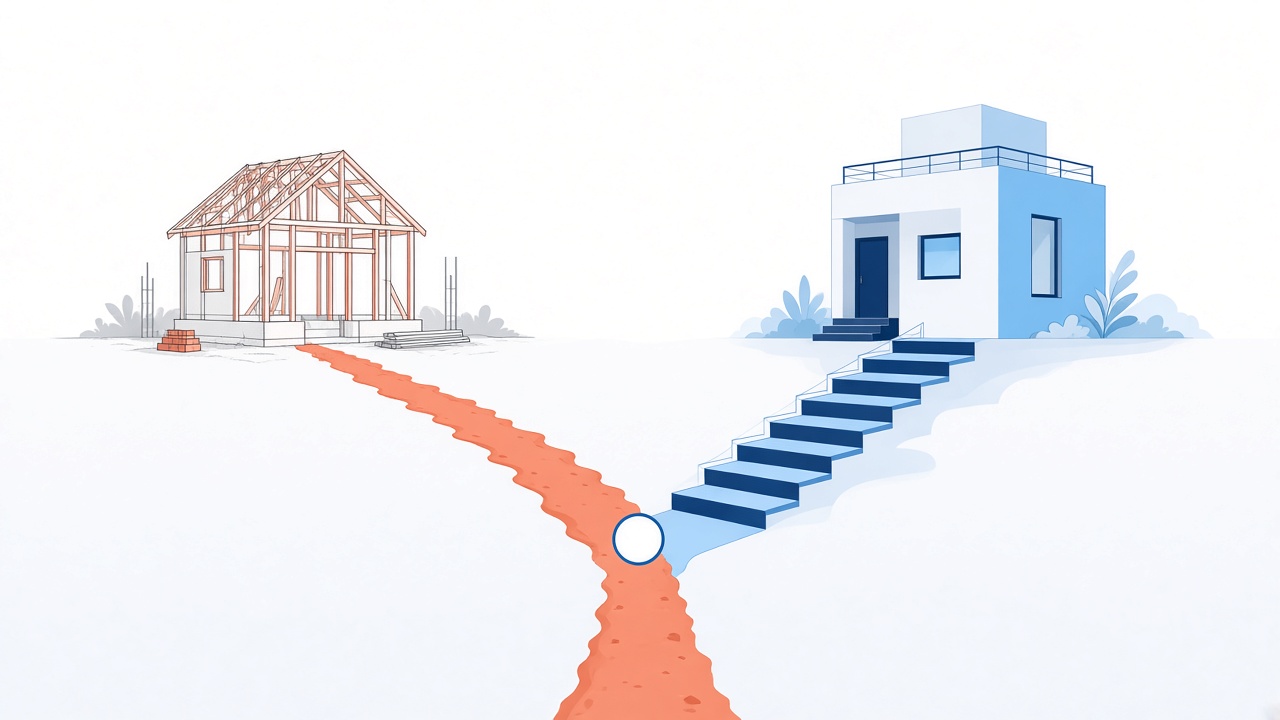
Ask yourself whether you could explain to a customer what happened if this broke at two in the morning. If you cannot describe your software at the level of what happens when someone submits this form and where that data goes, you do not yet have a product. The distance between a demo and a product is exactly where the expensive surprises live.
05
What a professional actually changes
People assume hiring a developer means throwing the work away, and usually it does not. What typically happens is that the good parts are kept, the structure underneath is rebuilt, security holes are closed, tests are added so future changes stop being a gamble, and deployment becomes something that happens reliably rather than hopefully. Bringing someone in while the codebase is still small is dramatically cheaper than after six weeks of accumulated tangle.
Go deeper
This is one chapter of a much longer story
Build Your First Real App is the next step: a 120-page prompting course where you build a mini marketplace one checked feature at a time, plus the Northstar visual kit to build against.
See the course — $29.99FAQs
Quick answers
Will a developer make me start over?
Rarely from scratch. More often the visible product is preserved while the foundation underneath is rebuilt, which is both cheaper and faster than a true rewrite.
How much does it cost to take over an AI-built project?
It depends on size and how tangled things have become, which is why earlier is cheaper. Our published tiers start around $750 for focused business sites, with product work quoted in milestones.
Can I keep building with AI after a developer is involved?
Often yes, and it works well once there is a sound structure and tests to catch mistakes. The structure is what makes AI assistance safe rather than risky.